A course about understanding machine learning algorithms — how they work, why they work, and when they will not.
The latest first. Anything time-critical also goes out on Piazza.
Machine learning is the study of models and algorithms for finding patterns in data. CS3264 is about the machinery underneath — the part that transfers when the tools change.
You will go beyond calling libraries: reading state-of-the-art methods, adapting them, and debugging models that misbehave.
CS2109S, one of CS2040/
In practice: comfort with linear algebra, vector calculus and probability. If the first two lectures feel fast, work through Chapters 2–5 of Mathematics for Machine Learning.
Course notes: Mathematical prerequisites — notation, algebra, linear algebra, derivatives, probability and optimisation, and where each appears in CS3264.
Tentative — this will change. Topics and pacing adapt as we go.
| Wk | Tue | Lecture | Tutorial (Wed) | Reading | Materials |
|---|---|---|---|---|---|
| 1 | 11 Aug | Introduction + Regression I | No tutorial; work through the maths prerequisites prerequisites notes | PRML Ch. 1 | slides · revised slides · video · notes |
| 2 | 18 Aug | Regression II — Probabilistic Modelling | No tutorial; work through the maths prerequisites prerequisites notes | PRML §1.2, §3.1.1, §3.3 | slides · revised slides · video · notes |
| 3 | 25 Aug | Classification I — Linear Classification | Probability & linear algebra; pseudoinverse tutorial 1 sheet · solutions |
PRML §4.1.3, §4.3.2, §4.3.4 | slides · revised slides · video · notes |
| 4 | 1 Sep | Classification II — Naive Bayes | Log-odds, multi-class tutorial 2 sheet · solutions | PRML §4.2 | slides · revised slides · video · notes |
| 5 | 8 Sep | Overfitting & Bias–Variance | Norms and regularisers; naive Bayes ↔ logistic regression tutorial 3 sheet · solutions |
PRML §3.2 | slides · revised slides · video · notes |
| 6 | 15 Sep | Computational Learning Theory (PAC) | Bias–variance; midterm scope tutorial 4 sheet · solutions |
Learning From Data Ch. 1–2 | slides · revised slides · video · notes |
| — | 19–27 Sep | Recess week | |||
| 7 | 29 Sep | MIDTERM — in the lecture slot, LT15 | Midterm debrief | — | |
| 8 | 6 Oct | Neural Networks I | PAC problems tutorial 5 sheet · solutions | PRML §5.1–5.3 | slides · video · notes |
| 9 | 13 Oct | Neural Networks II — CNNs, RNNs, Transformers, SGD | Backpropagation and stochastic gradient descent tutorial 6 sheet · solutions |
PRML §5.5.6 | slides · video · notes |
| 10 | 20 Oct | Unsupervised I — Clustering and Representation Learning | Multivariate Gaussians tutorial 7 sheet · solutions | PRML §9.1, §12.1.1–12.1.2, §12.4.2; Deep Learning Ch. 14 introduction, §14.1–14.2 Optional: ISL Ch. 12 For the tutorial: PRML §2.3 through §2.3.3 | slides · video · notes |
| 11 | 27 Oct | Unsupervised II — Variational Inference and VAEs | Latent variable models tutorial 8 sheet · solutions |
PRML §1.6.1; §10.1 opening (before §10.1.1); Auto-Encoding Variational Bayes Understanding Diffusion Models: A Unified Perspective (Luo, tutorial) §2.1–2.2 Tutorial on Variational Autoencoders (Doersch) | slides · video · notes |
| 12 | 3 Nov | Unsupervised III — Diffusion Models | KL divergence and variational inference tutorial 9 sheet · notebook · open in Colab |
Denoising Diffusion Probabilistic Models Understanding Diffusion Models: A Unified Perspective (Luo, tutorial) | slides · video · notes |
| 13 | 10 Nov | Exam-prep recitation (TAs) Instructor away (CoRL) |
KL/VAE problems; final exam recap | — | semester review |
| — | 14–20 Nov | Reading week | |||
| — | 25 Nov | FINAL EXAM · 5–7pm · venue TBA Provisional | |||
Readings are worth doing before the lecture. Slides and recordings are posted here as they are ready; recordings are also on Panopto via Canvas. Tutorial sheets go up on Tuesdays for the following week’s Wednesday session — work through them beforehand.
Two assignments, 15% each. Both are individual work, and both are due on Friday 13 November 2026, 23:59 through Canvas.
Write six pen-and-paper questions on course topics that a fixed small language model (Qwen3-1.7B) gets wrong, with your own solutions and a short prediction of why it fails.
Take a question that Qwen3-1.7B gets wrong, build a reusable repair, and test it against a baseline and a control, on new variants, and on questions the model already gets right.
Both exams are closed book. No cheat sheet for the midterm; a two-page cheat sheet for the final.
Two individual assignments, 15% each, both due Friday 13 Nov 2026, 23:59. Details and files are in Assignments.
Tue 29 Sep 2026, 4–6pm · LT15. In class, on paper, MCQ and fill-in-the-blank. Starts at 4pm sharp. No make-up paper.
No cheat sheet and no notes. Exact scope announced on Piazza nearer the date.
Wed 25 Nov 2026, 5–7pm. Two hours, paper exam, cumulative. You may bring a two-page cheat sheet you prepare yourself. Venue TBA.
Provisional — taken from the published AY26/27 timetable. The official NUS exam timetable is the authority; confirm before booking anything. Note it falls early in the exam period, about two weeks after the last lecture.
Everything here is free.
Pattern Recognition and Machine Learning — Christopher Bishop. The weekly readings in the schedule refer to this one.
Do not overlook the appendices — they are a compact reference for most of the mathematics the chapters assume: B probability distributions, C matrix identities, D calculus of variations, E Lagrange multipliers.
Mathematics for Machine Learning — Deisenroth, Faisal & Ong. Useful two ways.
As a second treatment when Bishop’s presentation of a topic does not land — the same material, explained differently, is often all it takes.
And for the background itself: Chapters 2–5 cover essentially all the linear algebra, vector calculus and probability this course assumes.
Earlier cohorts built one shared set of notes covering the whole syllabus — probability and vector calculus through to PAC bounds, kernels, EM and VAEs.
AY2025/26 notes — PDF, 37 pages. Written by students, so treat them as a study aid rather than an authority: verify anything you intend to rely on.
They may not be brought into either exam this year. The midterm is fully closed book; the final allows a two-page cheat sheet you write yourself.
Lecture notebooks are on Google Colab; links appear with each lecture. They are written to be read, not just run — the implementations follow the equations as we derive them in the course, rather than the fastest library call.
The principle is simple: your graded work should be your own. NUS has a strict policy on plagiarism; cases are reported to the department, and if found guilty you will fail the course.
Fine: discussing ideas and approaches;
using public information in your own words, with attribution.
Not fine: copying verbatim; sharing code or write-ups.
There are always better options — ask on Piazza, arrange a consultation, or hand in something incomplete. All of those are recoverable.
You may use them. We would rather set a sensible policy than pretend otherwise.
Use them as a tutor — explanations, analogies, hints when stuck. Try opening with: “You are a teaching assistant in a machine learning class. Your goal is to help me understand. Do not give me the answer directly.”
Do not paste their output into graded work. That is plagiarism.
They are good at this material now — which is the problem. A derivation you did not do teaches you nothing, and both exams are on paper. The errors that remain are subtle: a dropped factor of ½, a convention that is not ours, a bound stated almost right — the kind you can only catch if you could have done it yourself.
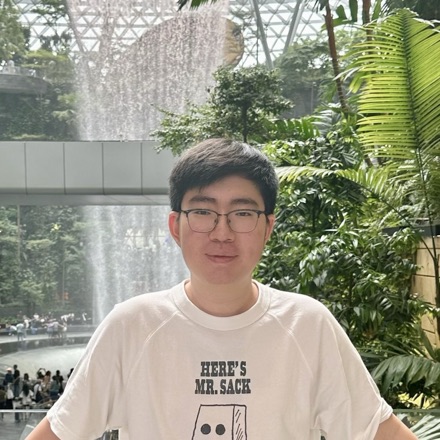
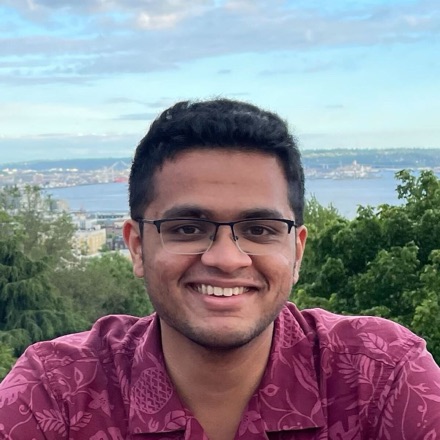
Five one-hour slots on Wednesdays in BIZ2-0302, from Week 3 — T06 (9am), T01 (10am), T02 (11am), T04 (1pm), T05 (2pm), taught by Shashank and Oscar. Attendance is taken and counts for 10%; you may miss two tutorials without penalty.
T03 (12pm) is closed. Other slots may still be merged after add/drop depending on final numbers; if your slot moves you will be reassigned.
Use Piazza rather than email for course questions — your classmates have the same question, and the TAs monitor it daily.